The 5 November deal is for type 2 diabetes, not obesity, and names only Singapore. What a second-brand strategy means for GLP-1 pricing, and what Middle East teams should watch.
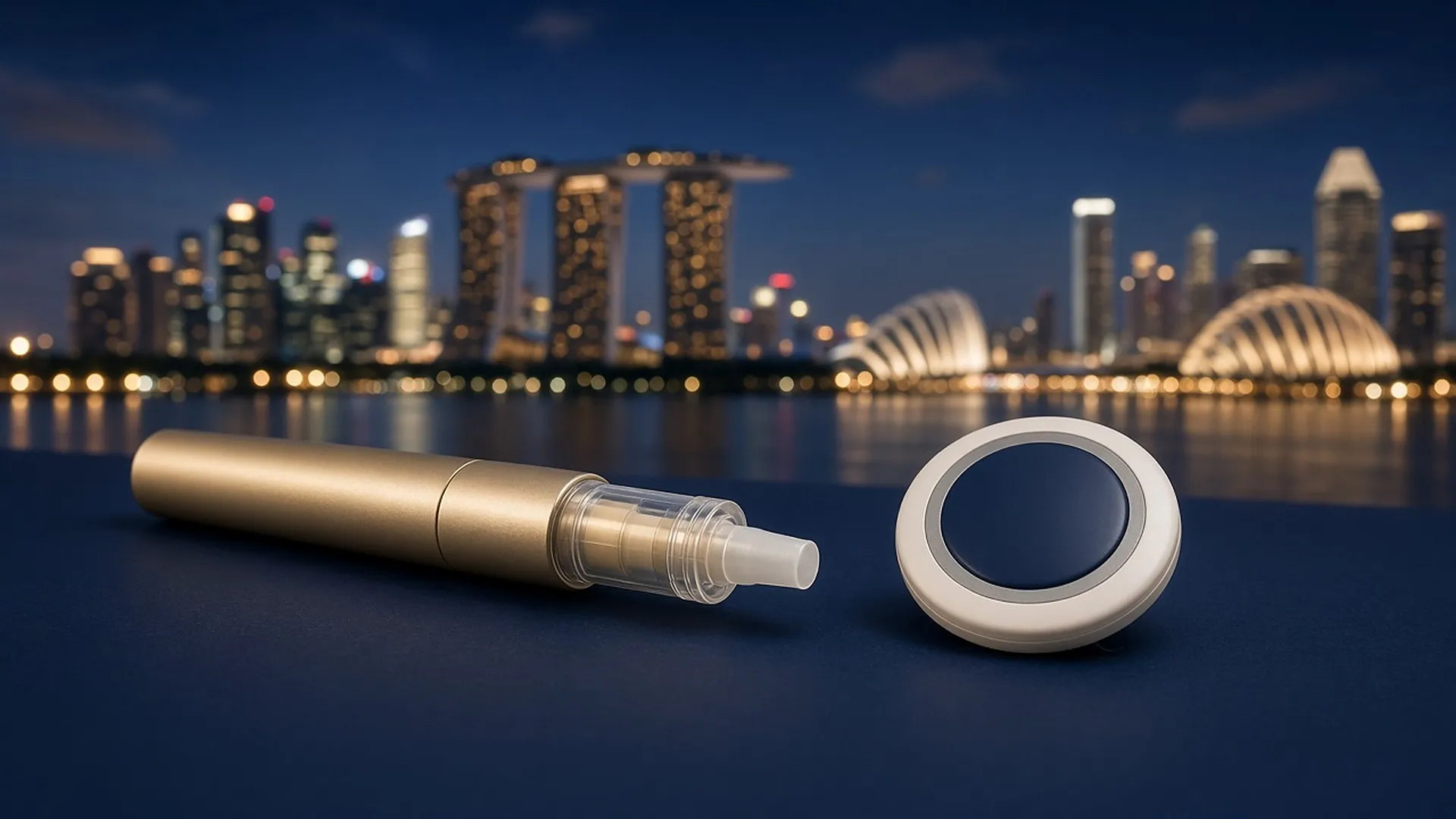
On 5 November 2026, Abbott and Novo Nordisk announced an expanded partnership. Abbott will commercialise Plosbrio, a new brand of semaglutide made by Novo, in Singapore and "other Asia Pacific countries". The companies call Plosbrio a second brand of Ozempic. It contains the same active ingredient, is made by Novo and is, in the companies' words, made available through the partnership so more people across Asia Pacific can reach it.
It would be easy to read this as an obesity launch, because semaglutide is best known for weight loss. It is not. The release says Plosbrio is for adults with type 2 diabetes and states plainly that it is not a weight-loss medication. And while the release talks about a regional, multi-country approach, it names only one market: Singapore.
This article sets out what the primary release says, what it leaves out, why a "second brand" is a meaningful strategic move at a time when semaglutide patents are expiring in several markets, and what teams working on GLP-1 and diabetes in the Middle East and Africa should take from it. I have worked from the release itself, the earlier Abbott India announcement of 27 February 2026, and independent reporting where I could read it.
What was announced
The announcement came from Singapore on 5 November 2026, issued through PR Newswire by Abbott. The key points:
- The agreement. Abbott will commercialise Plosbrio (semaglutide), "developed and manufactured by Novo", across Singapore and other Asia Pacific countries.
- The product. Plosbrio is a second brand of Ozempic. The release says it contains the same active ingredient, is made to the same quality standards, and was introduced as a second brand specifically for the countries covered by this agreement.
- The indication. An adjunct to diet and exercise to improve blood sugar control in adults with insufficiently controlled type 2 diabetes. It is also indicated to reduce the risk of cardiovascular and kidney events in adults with type 2 diabetes and established heart or kidney disease.
- The device. The FlexTouch pen, once weekly, in 0.25 mg, 0.5 mg, 1 mg and 2 mg dose strengths.
- The roles. Abbott will promote and distribute. Novo develops and manufactures.
- The caveat. Availability may vary by market and is subject to regulatory approvals, registration requirements and local launch planning.
Two executives are quoted. Karim Elmashad, divisional vice president for Abbott's medicines business in Asia Pacific, said type 2 diabetes is one of the fastest-growing health challenges across the region, yet access to advanced therapies remains uneven. Jay Thyagarajan, senior vice president for Asia Pacific at Novo, called the deal a "first-of-its-kind, multi-country collaboration across Asia Pacific" and said semaglutide has been taken by more than 32 million people worldwide.
What the release does not say
As important as what was announced is what was left out. I could not find any of the following in the release or in the independent coverage I read:
- A list of countries beyond Singapore.
- A launch date for any country.
- A price, or a price relative to Ozempic.
- Whether Singapore's regulator, the Health Sciences Authority, has registered Plosbrio.
- Any financial terms or revenue-sharing arrangement.
- An estimate of how many patients the companies expect to reach.
The release says the companies "will share more details on availability in each market as the launch progresses". So any article that lists "the markets" for Plosbrio is going beyond the record.
Why this is not an obesity story
Semaglutide is sold by Novo under different brands for different conditions. Ozempic is for type 2 diabetes. Wegovy is for weight management. The Plosbrio release follows the Ozempic route. Its question and answer section says Plosbrio "is not a weight-loss medication and should only be used as prescribed by your doctor".
The release does note that semaglutide has "demonstrated significant HbA1c reduction, weight-loss benefits, and proven reduced risk of cardiovascular and kidney events in people with type 2 diabetes". That is a statement about the molecule's effects in people with diabetes, not an obesity indication. For anyone writing about this deal, the distinction matters, because diabetes and obesity products carry different approved indications.
The Plosbrio name has surfaced before. The Globe and Mail reported in January 2026 that Novo was considering Plosbrio and a second new name, Poviztra, in Canada, describing the new names as medically identical to Ozempic and Wegovy. A Health Canada spokesman said the only difference between the old and new versions is the name and packaging, and that they are not generic products. That is Canadian reporting and not part of the 5 November release, which covers only the diabetes brand.
The second-brand strategy, in plain terms
A "second brand" is the same medicine, from the same manufacturer, sold under a different name. Why would a company do that?
The Globe and Mail quoted Michael Law, a pharmaceutical policy researcher at the University of Calgary, explaining the logic in the Canadian context. A company could keep the original brand at its current price while pricing the second brand much closer to generics. "There's a lot to be captured in the generic market, even at lower prices," he said, because so many people use these drugs and more will once they are cheaper. That is one researcher's analysis of the Canadian case, not Novo's stated rationale for Asia Pacific.
Novo's own wording for Asia Pacific is about access and reach. The release explains that the second brand lets Abbott promote and distribute the medicine in more countries, reaching people who may not have had access before. It does not mention generics or price.
I think both things can be true. A second brand is a way to widen distribution through a partner with a strong commercial footprint. It is also a way to occupy a lower price tier without publicly discounting the flagship. Which of the two matters more in each market depends on prices and competition that are not yet public.
Where this sits in a pattern
Plosbrio is not the first time Novo and Abbott have worked together on semaglutide. The release says the deal "builds on" Abbott's commercialisation of Extensior, another second brand of Ozempic for adults with type 2 diabetes in India.
India. Abbott announced the Extensior partnership with Novo Nordisk India on 27 February 2026. Abbott's own release says Extensior is a second brand of Ozempic, developed and manufactured by Novo and commercialised by Abbott, available as a once-weekly FlexTouch pen in 0.25 mg, 0.5 mg and 1 mg strengths. The Economic Times reported that the partnership came less than a month before semaglutide's patent expiry in India, which it gave as 21 March 2026, and that a number of Indian generic makers had lined up launches. Business Standard reported that Abbott would exclusively distribute and market Extensior, becoming the second company to secure sole distribution rights for Novo's semaglutide portfolio in India after Emcure Pharma. The Hindu BusinessLine reported that Novo's weekly prices announced at its December launch of Ozempic in India were 2,200 rupees for 0.25 mg, 2,542 rupees for 0.5 mg and 2,794 rupees for 1 mg.
Canada. According to The Globe and Mail, Health Canada approved the brand names Plosbrio and Poviztra on 22 December and the last legal barriers to generic semaglutide expired on Sunday 4 January 2026. Novo's Canadian spokeswoman said the company was considering competing in the generic market with those versions. I could not read later reporting in full, so I cannot say whether Plosbrio has since launched in Canada.
The wider picture. Headlines in Reuters and Bloomberg from May 2026 describe Brazil approving its first generic semaglutide pen after the Ozempic patent expiry, a telehealth company offering a generic semaglutide in Canada, and Novo expecting a generic Ozempic in China to be delayed until next year. Those articles are behind paywalls and I could read only the headlines, so I have not relied on their details.
Put together, the pattern is consistent: as semaglutide patent protection ends country by country, Novo is using partners and second names to hold volume, rather than relying only on the Ozempic brand.
Why Asia Pacific, and why Abbott
The release gives the market case in one paragraph. Across Asia Pacific, type 2 diabetes is increasingly characterised by earlier onset, faster progression and a higher risk of cardiovascular and kidney complications, citing a 2021 Lancet Commission. In the Southeast Asian region, it says, more than 107 million adults live with diabetes, and the figure is projected to reach 185 million by 2050.
I checked those numbers against the IDF Diabetes Atlas, 11th edition (2025). IDF counts 106.9 million adults with diabetes in its South-East Asia region in 2024, rising 73 percent to 184.5 million by 2050. It notes that almost one in two adults with diabetes in that region (42.7 percent) are undiagnosed, and that India accounts for one in seven of all adults with diabetes worldwide.
Singapore sits in a different IDF region, the Western Pacific. That region has the largest number of adults with diabetes of any IDF region: 215.4 million in 2024, rising 18 percent to 253.8 million by 2050, with a regional prevalence of 12.4 percent. IDF says half of adults with diabetes in the Western Pacific are undiagnosed, the second highest share of any IDF region.
Two cautions. The release quotes the South-East Asia figure but the deal covers "Singapore and other Asia Pacific countries", which spans more than that IDF region. And a large number of people with diabetes is not the same as a large number of treated, eligible, reimbursed patients. The undiagnosed shares above are a reminder of how big that gap can be.
As for Abbott, the release stresses its breadth in diabetes care: medicines, diagnostics, continuous glucose monitoring (the FreeStyle Libre system) and diabetes-specific nutrition. Abbott describes itself as having 122,000 colleagues serving people in more than 160 countries, and Novo as having over 67,000 employees. The two have partnered since 2019 to integrate Libre with Novo's connected insulin pens.
The release is careful on one point. Plosbrio and FreeStyle Libre are "separate products and are not sold or offered together", and decisions on their use remain with healthcare professionals. It also cites real-world evidence that using Libre technology with GLP-1 therapy can improve HbA1c outcomes and support adherence. Whether Abbott builds a combined offer around that evidence is something to watch, but nothing in the release says it will.
The molecule's record, as the companies describe it
Because the release is a company document, I have marked the claims as theirs. They say semaglutide has been on the market globally for close to a decade, with more than 58 million patient-years of exposure across all semaglutide products. The footnote explains the figure as the number of people who have used semaglutide multiplied by time on medicine, drawn from Novo's data on file. They say it is taken by more than 32 million people worldwide. They say semaglutide is 94 percent homologous to natural GLP-1, and that it was added to the World Health Organization's essential medicines list in 2025.
Abbott's February release for India gave a smaller exposure figure, more than 49 million patient-years, so the companies' own figure has changed between releases. Their numbers come from their own data and the prescribing information, and I could not verify them independently.
What this means for the Middle East and Africa
The deal covers Asia Pacific. It says nothing about the Middle East or Africa. But the Gulf is working through the same questions, and three threads are worth keeping apart.
Semaglutide generics are already approved in Saudi Arabia. OneSource's own filing of 11 February 2026 says it and Hikma received SFDA approval for a generic semaglutide. Approval is not launch, and I could not confirm whether that product is on sale. But it means Saudi Arabia is a market where the originator can expect competition on the molecule.
Novo is localising semaglutide in Saudi Arabia. Dawaa News reported on 29 September 2026 that Novo's Saudi general manager, Hamza Ben Harkat, said efforts to localise semaglutide manufacturing were announced at the Riyadh Global Medical Biotechnology Summit, building on a memorandum of understanding between Novo and Lifera signed on 28 April 2025. Dawaa News also states that no date for commercial production, no capacity and no investment figure has been published, and that locally made product is not yet available.
There is no Plosbrio announcement for the region. Nothing in the public record says a second brand is planned for Saudi Arabia, the UAE or elsewhere in the Middle East, and I have not assumed one. The Plosbrio release restricts its second-brand logic to "the countries in this agreement".
What the Asia Pacific deal does give regional teams is a live example of how an originator behaves when patents end: partner for reach, add a second name, keep the flagship brand's price position. Whether any of that applies in the Gulf is a research question, not a conclusion.
What teams should research now
If you work on diabetes or GLP-1 products in the Middle East, North Africa or Asia Pacific, here is where I would start.
1. Map patent and exclusivity status market by market. Build early, base and late scenarios for generic semaglutide entry in each country you care about, and note where second brands are already in use. Every forecast depends on this. Our obesity drug market share and GLP-1 competition analysis covers the competitive context.
2. Test whether physicians see a second brand as the same medicine. Ask endocrinologists, internists and family physicians how they would treat a second brand with the same active ingredient, and what evidence or service they would want. Our GLP-1 physician survey in Saudi Arabia shows the approach.
3. Understand how pricing tiers would be received. If an originator offers a second brand at a lower price, how do payers, pharmacists and patients react? Does it signal quality, or confuse? In markets where price cuts are already under way, see our UAE diabetes price-cut research.
4. Study the distribution partner model. Abbott brings a commercial footprint that Novo chose to use. In your market, which partners could extend reach in primary care, pharmacies or underserved regions? What does the partner bring beyond logistics?
5. Look at the full diabetes pathway. The release links GLP-1 therapy with glucose monitoring. Research how physicians and patients combine monitoring, medicines and nutrition, and what would make a bundled approach credible or not.
6. Size the treated population, not the disease population. Move from prevalence to diagnosis, treatment, persistence and payment, as the undiagnosed shares above suggest.
Who gains, who loses, and what sceptics would say
Possible winners. Patients in markets where a lower-priced, originator-made option widens access. Abbott, which adds a high-profile prescription medicine to a diabetes portfolio it describes as spanning the full care continuum. Novo, which keeps its molecule in the market under a name that can compete on price.
Possible losers. Generic makers that planned to compete with the originator on price alone. Smaller brands in the class if a second brand takes the price-sensitive segment.
The sceptic's case. A sceptic would note that the release gives no price, no list of countries and no launch date, so the "access" claim is untested. They would add that a second name for the same medicine can confuse patients and prescribers, and that critics may see it as a way to defend margins rather than to widen access. Those are reasonable questions. The release does not answer them.
What to watch next
- Country announcements. Which countries beyond Singapore get Plosbrio, and in what order.
- Registration. Evidence that regulators, starting with Singapore's Health Sciences Authority, have approved the brand.
- Price. The price relative to Ozempic and to generics in each market.
- Canada. Whether Plosbrio is launched there, as Novo said it was considering.
- Combined offers. Whether Abbott links Plosbrio with its glucose monitoring in any market, despite the release saying the two are separate.
- The Middle East. Any Novo statement about second brands, generics or local manufacturing timelines in the Gulf.
How BioNixus helps
BioNixus has run healthcare and B2B market research since 2012, with 118 clients in 48 countries. Our physician network is 82,000+ physicians globally and about 3,200 in the Middle East. Mohammad Alsaadany, our AMEA Director, leads our work across APAC, the Middle East and Africa. We work from our Americas office and global HQ in the USA, our Europe office in the UK, our AMEA office in Cairo and our KSA partner office in Al Khobar.
For diabetes, GLP-1 and obesity teams across Asia Pacific, the Middle East and Africa, we run:
- Physician research with endocrinologists, internists, family physicians and diabetologists, through physician insights interviews and surveys.
- Payer and pricing research that tests how tiered pricing and second brands would be received.
- Market access support that links study findings to registration, reimbursement and tender plans.
- Patient and pharmacist research that shows what people pay, where they buy and why they stop treatment.
See our country pages for Singapore and India, and our GCC obesity market hub. Visit bionixus.com to learn more.
Plan your GLP-1 and diabetes research with BioNixus
If your team needs to understand how physicians, payers and patients will respond to generics, second brands and new price tiers, talk to us. BioNixus combines a physician network of 82,000+ physicians globally and about 3,200 in the Middle East with local expertise from our AMEA office in Cairo and our KSA partner office in Al Khobar. Start a conversation at bionixus.com/contact.