Geopolitical Contagion: Assessing the Impact of a Regional Crisis on Middle East Economies and Healthcare Resilience
Geopolitical Contagion: Assessing the Impact of a Regional Crisis on Middle East Economies and Healthcare Resilience (2026 Strategy) examines how pharmaceutical, medtech, and payer teams should interpret market signals in GCC and MENA. Commercial and insight leaders use this lens to align registration sequencing, tender strategy, and evidence plans with what regulators and payers actually reward—not generic global templates. Start with the healthcare market research hub and GCC market access guide when scoping cross-border programmes.
BioNixus publishes this briefing for market access, medical affairs, and strategy teams who need disciplined field intelligence without overstating unpublished clinical statistics. Where product-specific claims appear in source materials, we reference sponsor or regulator disclosures only; we do not invent trial outcomes or epidemiology figures.
For a scoped workshop on geopolitical contagion, contact BioNixus to align methodology, timelines, and stakeholder maps.
Key insights summary
- Geographic focus: GCC and MENA — align sampling, payer interviews, and dossier modules to local formulary and tender mechanics.
- Evidence discipline: Separate regulatory facts from commercial forecasts; Gulf uptake depends on NUPCO, MOHAP, and private insurer rules more than global headline market size.
- Research design: Pair quantitative healthcare research with qualitative KOL and payer depth when access narratives must survive committee scrutiny.
- Registration: SFDA registration strategy and UAE MOHAP and DHA market access pathways often recycle FDA or EU modules when Arabic labeling and pharmacovigilance plans are ready.
- Advisory: pharmaceutical market access consulting helps translate insight into tender-ready value stories.
Detailed analysis
Geopolitical Contagion: Assessing the Impact of a Regional Crisis on Middle East Economies and Healthcare Resilience
Geopolitical Contagion: Assessing the Impact of a Regional Crisis on Middle East Economies and Healthcare Resilience (2026 Strategy) examines how pharmaceutical, medtech, and payer teams should interpret market signals in GCC and MENA. Commercial and insight leaders use this lens to align registration sequencing, tender strategy, and evidence plans with what regulators and payers actually reward—not generic global templates. Start with the healthcare market research hub and GCC market access guide when scoping cross-border programmes.
BioNixus publishes this briefing for market access, medical affairs, and strategy teams who need disciplined field intelligence without overstating unpublished clinical statistics. Where product-specific claims appear in source materials, we reference sponsor or regulator disclosures only; we do not invent trial outcomes or epidemiology figures.
For a scoped workshop on geopolitical contagion, contact BioNixus to align methodology, timelines, and stakeholder maps.
Key insights summary
- Geographic focus: GCC and MENA — align sampling, payer interviews, and dossier modules to local formulary and tender mechanics.
- Evidence discipline: Separate regulatory facts from commercial forecasts; Gulf uptake depends on NUPCO, MOHAP, and private insurer rules more than global headline market size.
- Research design: Pair quantitative healthcare research with qualitative KOL and payer depth when access narratives must survive committee scrutiny.
- Registration: SFDA registration strategy and UAE MOHAP and DHA market access pathways often recycle FDA or EU modules when Arabic labeling and pharmacovigilance plans are ready.
- Advisory: pharmaceutical market access consulting helps translate insight into tender-ready value stories.
Detailed analysis
Geopolitical Contagion: Assessing the Impact of a Regional Crisis on Middle East Economies and Healthcare Resilience
Geopolitical Contagion: Assessing the Impact of a Regional Crisis on Middle East Economies and Healthcare Resilience (2026 Strategy) examines how pharmaceutical, medtech, and payer teams should interpret market signals in GCC and MENA. Commercial and insight leaders use this lens to align registration sequencing, tender strategy, and evidence plans with what regulators and payers actually reward—not generic global templates. Start with the healthcare market research hub and GCC market access guide when scoping cross-border programmes.
BioNixus publishes this briefing for market access, medical affairs, and strategy teams who need disciplined field intelligence without overstating unpublished clinical statistics. Where product-specific claims appear in source materials, we reference sponsor or regulator disclosures only; we do not invent trial outcomes or epidemiology figures.
For a scoped workshop on geopolitical contagion, contact BioNixus to align methodology, timelines, and stakeholder maps.
Key insights summary
- Geographic focus: GCC and MENA — align sampling, payer interviews, and dossier modules to local formulary and tender mechanics.
- Evidence discipline: Separate regulatory facts from commercial forecasts; Gulf uptake depends on NUPCO, MOHAP, and private insurer rules more than global headline market size.
- Research design: Pair quantitative healthcare research with qualitative KOL and payer depth when access narratives must survive committee scrutiny.
- Registration: SFDA registration strategy and UAE MOHAP and DHA market access pathways often recycle FDA or EU modules when Arabic labeling and pharmacovigilance plans are ready.
- Advisory: pharmaceutical market access consulting helps translate insight into tender-ready value stories.
Detailed analysis
Geopolitical Contagion: Assessing the Impact of a Regional Crisis on Middle East Economies and Healthcare Resilience
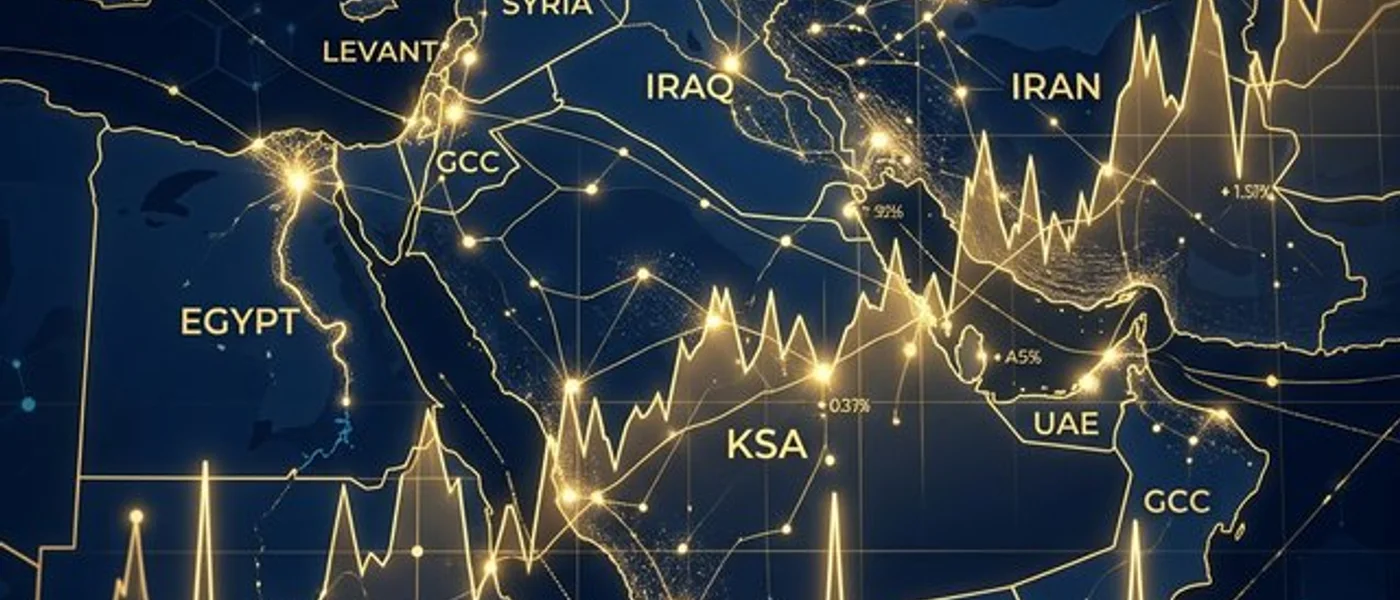
The Middle East stands at a critical juncture. As of February 2026, the escalation of regional tensions has triggered a cascade of macroeconomic and sector-specific shocks. For management consultants and institutional leaders, the priority is no longer growth, but strategic resilience. This guide analyzes the financial and healthcare implications of a multi-front conflict and provides a roadmap for navigating the ensuing volatility.
1. The Macro-Financial Shock: USD Dominance & Oil Volatility
A regional conflict involving a major power like Iran immediately triggers a flight to safety. The U.S. Dollar (USD) surges as investors exit emerging market positions, leading to higher borrowing costs for regional governments. Concurrently, the Brent Crude price enters a period of extreme volatility, potentially exceeding $120/barrel if supply through the Strait of Hormuz is obstructed.
While this provides a fiscal windfall for net oil exporters (Saudi Arabia, UAE, Qatar), it creates a devastating deficit expansion for net importers like Jordan and Egypt, who must then divert limited foreign currency to essential fuel subsidies at the expense of infrastructure and healthcare programming.
2. Currency Vulnerability Heatmap: Pegs vs. Floating Regimes
The resilience of a nation’s economy during this crisis is dictated primarily by its currency regime.
The Safe Havens: GCC USD Pegs
The Saudi Riyal (SAR), UAE Dirham (AED), and Kuwaiti Dinar (KWD) remain structurally stable due to massive foreign exchange reserves and the direct peg to the USD. However, these nations face imported inflation. As the cost of manufacturing and shipping in the U.S. and Europe rises, the GCC's purchasing power for high-tech medical equipment and patented biologics is effectively squeezed.
The High-Risk Zone: EGP, IQD, and JOD
- Egypt (EGP): The Egyptian Pound faces massive depreciation pressure. Even with recent stabilization, a regional war can trigger a 20-30% devaluation as tourism (a critical FX source) evaporates overnight.
- Iraq (IQD): Despite the official peg, the parallel market gap will widen as the Central Bank struggles with USD availability, making pharmaceutical imports through private channels prohibitively expensive.
- Jordan (JOD): Protected by deep institutional ties to the West, the JOD remains stable but the underlying balance of payments is severely strained by the collapse of regional trade.
3. Healthcare in the Crosshairs: Supply Chain & Logistics
The GCC healthcare ecosystem is the most advanced in the region, but also the most dependent on global trade lanes. A disruption in the Strait of Hormuz—through which nearly 20% of global oil and vast quantities of medical supplies pass—creates a 'Logistics Chokepoint'.
Supply Chain Paralysis
Most GCC nations maintain 3-6 months of strategic medical reserves (e.g., KSA NUPCO stockpiles). However, the sudden closure of shipping lanes would force a transition to Air Freight. Logistics costs for temperature-sensitive medications (Oncology biologics, Vaccines) would rise by 300-500%, forcing governments to prioritize life-saving medications over elective surgical supplies.
The Rise of Local Manufacturing
Nations that have invested in 'Vision-based' localization (like Saudi Arabia’s Vision 2030) will prove more resilient. Local plants (Tabuk, SPIMACO, Jamjoom) become the national security line, emphasizing the need for 'Primary Research' into local manufacturing capabilities during peace-time to ensure continuity during conflict.
4. Strategic Roadmap for C-Suite & Institutional Leaders
To navigate the 2026 reality, BioNixus recommends three immediate pillars of action:
- Multi-Channel Logistics Defense: Move from Just-in-Time (JIT) to Just-in-Case (JIC) inventory models. Secure alternative logistics routes through the Red Sea (NEOM/Jeddah) or bypass the Gulf through air-bridge agreements.
- Currency Hedging & FX Diversification: For businesses operating in Egypt and Iraq, implement aggressive FX hedging strategies and seek USD-indexed contracts where possible to mitigate the 20-30% devaluation risk.
- Accelerated Localization (KSA/UAE): International pharmaceutical firms must fast-track tech-transfers to local partners in the GCC. Government preference for 'Local Content' will reach 100% enforcement during periods of conflict.
GCC implications for sponsors and insight teams
Saudi Arabia
Registration and public uptake require SFDA dossiers, Arabic labeling, and often NUPCO engagement. Saudi Arabia healthcare research programmes should stress-test whether global value dossiers include Gulf-relevant budget impact and comparators.
United Arab Emirates
Federal and emirate policies may diverge; private insurance prior authorization can outpace public lists. UAE healthcare research helps map stakeholder paths in Dubai and Abu Dhabi.
Cross-GCC harmonization
Harmonized evidence packages—stability, pharmacovigilance, and conservative epidemiology—support faster cycles when FDA or EC reference approvals exist. Oral medicines may emphasize adherence counselling; specialty therapies require site-of-care readiness assessments.
Insight cadence
Quarterly payer interviews and annual epidemiology refreshes outperform one-off launch studies when formularies shift mid-year. Align research waves with SFDA and MOHAP scientific advice windows so evidence packages stay committee-ready.
BioNixus advisory
BioNixus supports GCC and MENA programmes with payer-ready narratives: SFDA/MOHAP dossier gap analysis, NUPCO tender mapping, bilingual KOL trackers, and competitive simulations. We combine quantitative healthcare research with pharmaceutical market access consulting so insight teams receive decision-grade recommendations—not slide recycling.
Recommended workstreams: (1) evidence and access storyline aligned to local committees; (2) registration timeline with conservative uptake assumptions; (3) field intelligence cadence for named competitors; (4) executive readouts for Riyadh, Jeddah, Dubai, and Abu Dhabi stakeholders. contact BioNixus to scope a 90-day briefing.
GCC implications for sponsors and insight teams
Saudi Arabia
Registration and public uptake require SFDA dossiers, Arabic labeling, and often NUPCO engagement. Saudi Arabia healthcare research programmes should stress-test whether global value dossiers include Gulf-relevant budget impact and comparators.
United Arab Emirates
Federal and emirate policies may diverge; private insurance prior authorization can outpace public lists. UAE healthcare research helps map stakeholder paths in Dubai and Abu Dhabi.
Cross-GCC harmonization
Harmonized evidence packages—stability, pharmacovigilance, and conservative epidemiology—support faster cycles when FDA or EC reference approvals exist. Oral medicines may emphasize adherence counselling; specialty therapies require site-of-care readiness assessments.
Insight cadence
Quarterly payer interviews and annual epidemiology refreshes outperform one-off launch studies when formularies shift mid-year. Align research waves with SFDA and MOHAP scientific advice windows so evidence packages stay committee-ready.
BioNixus advisory
BioNixus supports GCC and MENA programmes with payer-ready narratives: SFDA/MOHAP dossier gap analysis, NUPCO tender mapping, bilingual KOL trackers, and competitive simulations. We combine quantitative healthcare research with pharmaceutical market access consulting so insight teams receive decision-grade recommendations—not slide recycling.
Recommended workstreams: (1) evidence and access storyline aligned to local committees; (2) registration timeline with conservative uptake assumptions; (3) field intelligence cadence for named competitors; (4) executive readouts for Riyadh, Jeddah, Dubai, and Abu Dhabi stakeholders. contact BioNixus to scope a 90-day briefing.