

1. The 2026 Pharmaceutical Landscape: An Extensive Executive Overview

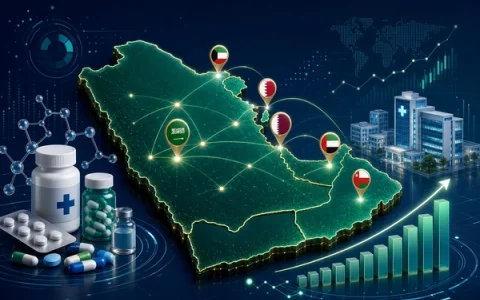
The Gulf Cooperation Council (GCC) pharmaceutical market is standing at the precipice of an era-defining structural evolution as we approach the critical milestone of 2026. Historically characterized by a high reliance on branded imports, fragmented regulatory oversight, and rapid, sometimes inefficient government spending, the region is now undeniably transitioning into a mature, value-conscious, and locally integrated healthcare ecosystem. Across Saudi Arabia, the United Arab Emirates (UAE), Kuwait, Qatar, Oman, and Bahrain, total aggregate pharmaceutical expenditure is conservatively projected to surpass the staggering figure of $80 billion by late 2026. This exponential growth vector is not an accident; it is being deliberately catalyzed by a perfect storm of demographic shifts, epidemiological transitions, sweeping regulatory modernization, and aggressive localization mandates dictated by ambitious national vision programs. For global pharmaceutical companies, cutting-edge biotech innovators, regional distributors, and specialized contract manufacturing organizations (CMOs), this landscape presents an unprecedented window of opportunity. However, the days of relying on a singular, monolithic "one size fits all" GCC commercial strategy are unequivocally and permanently over.

The modern GCC pharmaceutical environment demands an unprecedented level of hyper-localized precision and strategic granularity. Decision-making authority across the region is increasingly decentralized across multiple, diverse payer archetypes. This ranges from the highly nationalized, volume-driven institutional purchasing of procurement giants like NUPCO in Saudi Arabia, to the highly privatized, complex, and insurance-driven provider networks of Dubai and Abu Dhabi in the UAE. Simultaneously, the region's overall therapeutic mix is tilting decisively and rapidly toward high-cost specialty medicines, advanced biologics, and orphan drugs designed for rare genetic disorders. This profound shift in the product portfolio is relentlessly exposing the limitations of traditional, primary-care-focused commercial operating models that were highly effective in the early 2010s but are now increasingly obsolete. Success in 2026 and beyond requires deep, nuanced institutional mapping, granular health economic and outcomes research (HEOR) modeling, and an unwavering, long-term commitment to localized real-world evidence (RWE) generation protocols.

To successfully navigate this complex and rapidly evolving terrain, pharmaceutical executives must fundamentally recalibrate their strategic priorities and resource allocations across the Arabian Peninsula. Key operational focus areas must now include proactive and sophisticated engagement with emerging Health Technology Assessment (HTA) frameworks, highly agile organizational responses to shifting international reference pricing (IRP) cascades, and the urgent establishment of robust local manufacturing or "fill-and-finish" joint venture (JV) partnerships. This comprehensive, 3000-word guide provides an exhaustive, multi-dimensional analysis of the GCC pharmaceutical market in 2026, dissecting critical country-level operational dynamics, complex regulatory hurdles, sophisticated pricing evolution, and the actionable commercial strategies designed to ensure sustained competitive advantage, robust market access, and long-term brand durability.

2. Comprehensive Analysis of Market Size, Structure, and Dominant Macro Drivers

The remarkable and sustained upward trajectory of the GCC pharmaceutical market is solidly underpinned by several robust, synergistic macro-economic and demographic pillars that differentiate the region globally. The region's total population is expanding at a remarkable rate, driven by a combination of robust natural domestic growth rates and a sustained, high-volume influx of expatriate professionals seeking economic opportunities in post-oil diversification economies. Crucially, the demographic profile across the GCC is also aging, leading to a concurrent, highly challenging rise in chronic, complex, and non-communicable diseases (NCDs) such as type 2 diabetes, cardiovascular disease (CVD), various oncological indications, and chronic respiratory disorders.

Epidemiological Shifts and the Escalating Chronic Disease Burden

The GCC demographic faces one of the highest and most challenging per-capita burdens of metabolic disorders globally. The prevalence of type 2 diabetes mellitus in populations across Saudi Arabia, Kuwait, and the UAE consistently ranks among the top tiers worldwide, often exceeding 18-20% of the adult population. This jarring epidemiological reality continuously generates an immense, sustained, and highly predictable volume of demand for advanced, next-generation anti-diabetic therapies (including GLP-1 receptor agonists and SGLT2 inhibitors), cardiovascular interventions (such as advanced PCSK9 inhibitors), and related, highly specialized complex care pathways. Furthermore, as regional healthcare infrastructure rapidly matures and sophisticated diagnostic capabilities systematically improve (heavily facilitated by the integration of artificial intelligence, genomic sequencing, and national digital health data initiatives), the clinical detection rates for complex solid and hematological malignancies, as well as exceptionally rare genetic and metabolic disorders (highly prevalent in the region due to high rates of consanguinity), are soaring. Consequently, targeted oncology, advanced immunology, and ultra-rare disease therapeutic portfolios are definitively becoming the primary, high-margin growth engines for multinational pharmaceutical corporations operating across the Middle Eastern theater.

Healthcare Infrastructure Expansion and Digital Transformation

To systematically combat the aggressively rising chronic disease burden, GCC governments are currently channeling unprecedented volumes of capital expenditure into the development of state-of-the-art, world-class healthcare infrastructure. Massive, multi-billion-dollar megaprojects, such as Saudi Arabia's sprawling, multi-disciplinary medical cities (e.g., King Fahd Medical City) and the UAE's specialized, free-trade healthcare zones (e.g., Dubai Healthcare City), are expanding inpatient and outpatient clinical capacity at a truly breakneck speed not seen anywhere else in the MENA region. This massive physical capacity expansion is strategically accompanied by an equally aggressive digital transformation mandate. This includes the rollout of unified, national electronic health records (EHRs), deep telehealth and telemedicine integration into primary care, and AI-driven diagnostic networks mapping entire population health trends. For forward-thinking pharmaceutical companies, this means directly interacting with highly sophisticated, data-rich provider networks that demand equally sophisticated, data-driven medical affairs engagement, comprehensive health economic models, and real-world evidence (RWE) capabilities that validate long-term clinical utility.

3. Granular Country-Level Dynamics: Mastering the Two-Speed Market Ecosystem

The convenient, traditional concept of treating the Middle East as a unified, homogenous "GCC market" is now widely regarded by industry analysts as a dangerous strategic fallacy. While high-level regulatory harmonization initiatives certainly exist and are progressing (such as centralized, aggregated purchasing mechanisms occasionally orchestrated via the Gulf Health Council), on-the-ground operational execution must be acutely, stubbornly country-specific to yield ROI. Leading commercial strategists advocate strongly for a "two-speed" analytical framework when designing Middle East launch sequences: categorizing internal markets strictly into primary scale and volume drivers (predominantly Saudi Arabia and the UAE) and critical, highly specialized adjacency markets (Kuwait, Qatar, Oman, and Bahrain).

Saudi Arabia: The Uncontested Regional Hegemon under Vision 2030

Representing significantly over 50% of the total GCC pharmaceutical value pool, the Kingdom of Saudi Arabia (KSA) is the indisputable, gravitational center of the regional market. Driven by the incredibly ambitious, multi-faceted Vision 2030 economic framework, the Saudi pharmaceutical market is currently characterized by highly aggressive, government-mandated localization targets. The Saudi Ministry of Investment and Ministry of Health collectively aim to significantly reduce the nation's historical reliance on finished pharmaceutical imports by strictly mandating local manufacturing footprints, secondary packaging facilities, and comprehensive technology transfer agreements as prerequisites for long-term tender participation. The National Unified Procurement Company (NUPCO) currently exercises massive, unprecedented monopsony power, centralizing procurement for the vast majority of government health sectors and aggressively utilizing volume aggregation to drive down unit costs for mature, primary care portfolios.

For highly innovative, novel therapies, the Saudi Food and Drug Authority (SFDA) has rapidly established itself as arguably the most efficient, transparent, and rigorous regulatory approval body in the MENA region. The SFDA's highly innovative pricing regulations—which stringently link domestic pricing to an expansive basket of 20 international reference countries—require meticulous, global launch sequencing strategies to avoid devastating cross-border value erosion. Furthermore, the sweeping privatization of the Ministry of Health (MOH) provider networks via the newly established "Health Holding Company" models is rapidly fragmenting the institutional purchasing landscape. This structural shift is requiring commercial organizations to deploy highly targeted, sophisticated Key Account Management (KAM) strategies aimed at newly empowered regional health clusters rather than a single, monolithic central ministry.

The United Arab Emirates: The Fast-Adoption Regional Innovation Hub

The United Arab Emirates firmly remains the region's premier, fast-track innovation hub, structurally prioritizing extremely rapid patient access to novel, breakthrough therapies. Representing a highly affluent, expatriate-heavy, and diverse demographic, the UAE pharmaceutical market is heavily, uniquely privatized, particularly within the influential emirate of Dubai. Mandatory, comprehensive health insurance schemas entirely dominate the payer landscape, creating a fragmented but highly lucrative commercial ecosystem. The Ministry of Health and Prevention (MOHAP) has successfully implemented several accelerated regulatory approval pathways specifically designed for breakthrough medications, orphan drugs, and advanced therapy medicinal products (ATMPs). This progressive approach often results in UAE market approvals directly trailing, or occasionally running parallel to, critical US FDA or European EMA milestones.

However, this uniquely rapid access comes bundled with intense, hyper-competitive commercial pressures. The UAE therapeutic market is highly saturated across multiple disease states, and institutional formulary access is fiercely contested by dozens of multinational and regional players. The recent implementation of Federal Decree-Law No. 38 of 2024, altering historical commercial agency laws and opening the legal door to multi-distributor models, is widely expected to inject significant, unprecedented price competition into the market, particularly for high-volume chronic disease treatments and complex generics. Successful execution in the deeply fragmented UAE health ecosystem requires highly nuanced, multi-stakeholder payer engagement, differentiating value propositions heavily tailored for diverse insurance unbrellas, and the deployment of incredibly robust, patient-centric support programs (PSPs) that guarantee high long-term adherence rates.

Kuwait, Qatar, Oman, and Bahrain: High-Value Specialty Adjacencies

While significantly smaller in aggregate total population, these crucial adjacency markets consistently punch far above their demographic weight in per-capita expenditure on highly specialized therapies. Kuwait and Qatar, heavily supported by robust, well-funded sovereign wealth mechanisms, possess highly centralized, comprehensively state-funded healthcare systems that offer an astonishingly wide breadth of coverage for high-cost oncology regimens, novel biologics, and ultra-rare disease therapeutics. In these specific, concentrated markets, highly localized Key Opinion Leader (KOL) engagement, pristine, flawless regulatory dossiers, and deep relationships with central tender committees are absolutely paramount for success. The recently enacted Ministerial Decree No. 62 of 2026 in Kuwait, establishing strictly mandated profit margins and rigorous pricing review mechanisms for the private sector, specifically underscores the rapidly growing trend of strict regulatory scrutiny even in highly affluent, previously deregulated adjacencies.

Oman and Bahrain offer their own distinct, unique strategic challenges and launch opportunities. Oman is aggressively, methodically pursuing comprehensive universal health coverage (UHC) models and is simultaneously working to aggressively expand its local manufacturing base (leveraging strategic geographic locations like the Salalah Free Zone for export). Bahrain continues to function effectively as a highly strategic, low-friction regulatory testing ground, leveraging its exceptionally agile and approachable National Health Regulatory Authority (NHRA) to successfully attract early-stage biotech launches and complex phased clinical trials.

4. The Strategic Imperative of Localization and True Supply Chain Resilience

The single most dominant, inescapable strategic imperative of the current decade across the entirety of the GCC is deep, structural localization. Triggered initially by devastating pandemic-era global supply chain vulnerabilities and permanently sustained by long-term geopolitical and economic realignment strategies, national GCC governments are simply no longer content to function as mere passive consumers of imported finished pharmaceuticals. They demand industrial participation.

In powerhouse markets like Saudi Arabia and the UAE, these localization initiatives are inextricably tied to immense, highly lucrative commercial incentives. Pharmaceutical companies that tangibly commit to local manufacturing, even starting with secondary packaging or sophisticated biological fill-and-finish operations, receive officially expedited regulatory reviews, guaranteed preferential treatment in massive, lucrative government procurement tenders, and significant, long-term tax flow advantages. Conversely, traditional generic or mature-brand manufacturers relying solely on archaic importation models face an increasingly hostile, exclusionary procurement environment. Global pharmaceutical conglomerates must urgently and decisively pivot away from traditional, passive distributorship models towards complex, highly integrated joint ventures (JVs) with capable regional powerhouses, formally transferring advanced technology and manufacturing know-how while carefully establishing legal frameworks to safeguard valuable intellectual property.

5. Advanced Market Access, Pricing Strategy, and Health Economics

Complex market access is objectively the defining, make-or-break commercial challenge of the 2026 GCC strategic landscape. The historical, high-margin era of default automatic reimbursement and unscrutinized, premium international pricing is definitively over. GCC payer sophistication is rising at a precipitous rate, characterized by the formal, widespread adoption of Health Technology Assessment (HTA) principles and highly aggressive, technologically augmented international reference pricing (IRP) mechanisms.

The Inevitable Rise of Managed Entry Agreements (MEAs)

To delicately balance the pressing need for clinical innovation with increasingly stringent national healthcare budget constraints, GCC regulators and central procurement agencies are increasingly demanding sophisticated Managed Entry Agreements (MEAs) and highly innovative pricing models as non-negotiable prerequisites. Value-based healthcare (VBHC) concepts are fundamentally shifting high-level institutional discussions away from simplistic unit cost-per-pill arithmetic toward complex, longitudinal analyses of total-cost-of-care and strictly verifiable, long-term patient outcomes. For phenomenally high-cost advanced biologics and cutting-edge gene therapies, sophisticated volume-capping arrangements, complex financial risk-sharing, and stringent outcomes-based reimbursement contracts are rapidly becoming standard, baseline prerequisites for any possibility of lucrative institutional formulary inclusion across Riyadh, Abu Dhabi, and Doha.

Navigating Treacherous Reference Pricing Cascades

Pharmaceutical pricing in the interconnected GCC environment is a highly sensitive, domino-effect ecosystem. The Saudi SFDA's meticulously calculated reference basket directly impacts massive regional volume baselines, whilst individual neighboring countries monitor European and intra-GCC price fluctuations with microscopic, software-driven precision. A seemingly minor strategic misstep in launch pricing negotiation within a perceived "minor" GCC market can easily, rapidly trigger devastating, unstoppable downward pricing spirals across the entire broader EMEA region due to deeply entrenched IRP logic. Complex global launch sequencing must therefore be rigorously, mathematically modeled to fiercely protect core tier-1 market value while simultaneously attempting to maximize early revenue realization across the broader Arabian Gulf footprint.

6. The Transformative Role of Digital Health and AI-Driven Analytics

Pervasive digitalization is fundamentally, irrevocably altering the core mechanics of commercial operations in the GCC pharmaceutical sector. National governments are aggressively rolling out comprehensive, unified digital health records (e.g., Saudi Arabia's SEHA platform, the UAE's Malaffi network), intentionally creating vast, incredibly valuable repositories of Real-World Data (RWD). Leading, forward-thinking pharmaceutical companies are actively leveraging artificial intelligence (AI), machine learning models, and advanced predictive analytics to heavily mine this anonymized data, proactively generating localized, statistically significant Real-World Evidence (RWE) to robustly support tough pricing negotiations, effectively demonstrate clinical superiority over established generics, and prove long-term efficacy across diverse, unique Middle Eastern genetic profiles.

Furthermore, authentic omnichannel commercial engagement is no longer an optional digital luxury; it is a fundamental operational necessity. Healthcare Professionals (HCPs) operating in the modern GCC are exceptionally digitally literate and critically time-poor. Traditional, high-frequency, face-to-face primary care sales representative deployments must be urgently superseded and augmented with highly sophisticated, targeted digital marketing campaigns, heavily personalized virtual interactive engagements, and on-demand, highly specialized medical education portals meticulously tailored to the specific, nuanced clinical sub-segments of regional Key Opinion Leaders (KOLs).

7. Navigating the Escalating Biosimilar and Generic Threat Landscape

The rapid, aggressive explosion of the high-quality biosimilar market is a definitively critical competitive dynamic for the 2026 GCC outlook. As multiple, massive global blockbuster biologics simultaneously lose patent exclusivity, cost-conscious GCC governments are actively, aggressively encouraging mass biosimilar uptake to deliberately create the necessary fiscal headroom required to fund incredibly expensive, novel, advanced therapies. Regulatory approval pathways specifically designed for complex biosimilars have been significantly streamlined and standardized across the region. In massive institutional tender settings across Saudi Arabia and centralized authorities in Kuwait, highly aggressive, winner-take-all tendering processes are generating incredibly rapid, devastatingly steep price cliffs for legacy originator molecules. To successfully defend historical market share and maintain revenue viability, original brand management teams must proactively ideate and flawlessly deploy comprehensive "beyond the pill" defensive strategies. This involves deeply leveraging immensely superior, integrated Patient Support Programs (PSPs), deploying superior, user-friendly proprietary administration device technologies, and relying heavily on deeply established, long-term KOL clinical loyalty.

8. The 2026 GCC Commercial Excellence Execution Playbook

Succeeding and maintaining dominance in the highly complex 2026 GCC pharmaceutical market requires nothing short of a total paradigm shift in traditional commercial strategy. Through extensive analysis and market observation, we define the modern, highly effective commercial excellence playbook through five indispensable, non-negotiable strategic pillars:

First, Elevate Localized Evidence Generation: Relying solely on global pivotal trial data is no longer sufficient. Global Phase III data must be rigorously supplemented with robust, localized RWE, complex pharmacoeconomic modeling specifically adapted to unique GCC clinical care pathways, and comprehensive, longitudinal observational studies directly involving statistically significant regional patient cohorts to prove absolute local efficacy.

Second, Master Key Account Management (KAM): Flattened, highly transactional, volume-focused sales teams must be systematically replaced with highly specialized, immensely capable, cross-functional Key Account Management teams. These elite units must consist of medical, commercial, and access professionals capable of engaging peer-to-peer and successfully negotiating highly complex MEAs directly with institutional C-suites, national procurement agency directors, and senior ministry officials.

Third, Embrace Deep, Structural Localization: Companies must tangibly transition away from pure, outdated exportation-only models toward deep, highly strategic joint ventures, comprehensive technical and intellectual tech transfers, and meaningful local manufacturing integration. This is the only sustainable strategy to reliably secure absolutely critical tender preferences, guarantee supply chain resilience, and generate crucial, long-term governmental goodwill in a highly nationalized procurement environment.

Fourth, Deploy True Omnichannel Sophistication: Marketing organizations must definitively move far beyond sending generic email blasts to deploying highly personalized, strictly data-driven HCP engagement ecosystems. This approach must deeply respect the severe time constraints and highly specialized scientific needs of top-tier regional Key Opinion Leaders, providing exactly the correct customized clinical data at precisely the right stage of the complex adoption journey.

Fifth, Mathematically Optimize Launch Sequencing: Absolute mathematical and analytical rigor must be rigorously applied to all regional launch timing decisions. The delicate balance must be struck to actively maximize early patient access and necessary cash flow while absolutely preventing any IRP-induced, long-term value erosion across the immensely critical broader multinational portfolio.

9. Definitive Conclusion: The GCC Pharmaceutical Imperative

The dynamic GCC pharmaceutical market of 2026 is a breathtakingly stark landscape of profound, unprecedented commercial opportunity balanced by uncompromising, systemic complexity. As the aggregated regional market fiercely surpasses the $80 billion precipice, the financial rewards for true strategic precision, operational excellence, and deep localized understanding are immense. However, the exact converse is also true: the financial and reputational penalties for misaligned, naive access strategies or superficial, execution-poor commercial deployment have never been steeper or more rapidly realized. Pharmaceutical organizations that consistently treat the GCC not merely as a convenient, secondary emerging market export destination, but explicitly as a critical, highly sophisticated, tier-1 global strategic hub, will unquestionably dominate the next crucial decade of advanced healthcare innovation across the entire Middle East. Through rigorous, committed localization, agile and innovative market access frameworks, and a deep, verifiable commitment to improving regional patient outcomes, the complex path to sustained, highly profitable market leadership in the dynamic GCC environment is definitively, structurally achievable for those willing to adapt.