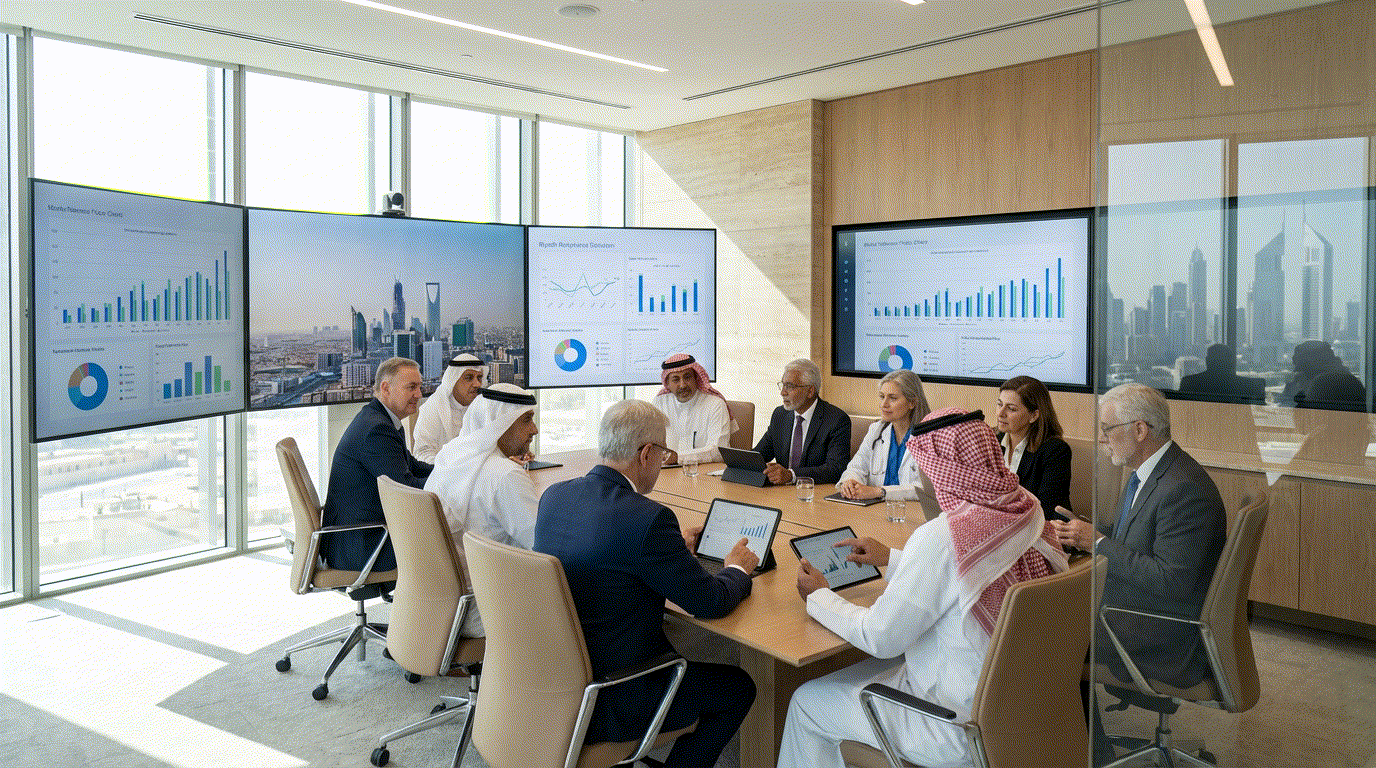
Regulatory and channel context for Egypt pharma fieldwork
Egypt pharmaceutical fieldwork must reflect dual public and private channel dynamics — MOH hospitals, university centres, and private networks — plus EDA registration context for innovative versus generic categories.
UHIA and tender-led procurement shape access for many molecules; field architecture should capture pharmacy and institutional stakeholders where channel mix determines real uptake, not only Cairo-based specialists.
Ethics and institution-specific permissions vary between public and private settings. BioNixus maps feasibility across Cairo and regional centres before recruitment calendars lock.
Arabic-first execution is standard for Egypt HCP and pharmacy research, with medical terminology reviewed before field to preserve clinical nuance in sponsor readouts.
For MENA multi-country programs, Egypt cells must harmonize QC with GCC standards while respecting distinct pricing, tender, and out-of-pocket channel logic.
Regional centre coverage beyond Cairo—Alexandria, Delta, and Upper Egypt where therapy prevalence requires—prevents oversampling capital-city specialists who do not represent tender-led volume in many categories.
Medical affairs and compliance reviewers increasingly request documented channel tags and exclusion logs; BioNixus delivers audit-ready handover packs so Egypt fieldwork survives internal governance without ad hoc forensics.
EDA registration categories and UHIA tender cycles influence which stakeholders must appear in sample architecture; feasibility maps these gates before recruitment commitments so field does not stall mid-wave when permissions lag.
Sponsors receive weekly field telemetry during active waves so quota and channel skew can be corrected before database lock.
The Egyptian Drug Authority (EDA) operates a tiered registration framework that distinguishes between innovative branded products, bioequivalent generics, and biosimilars — each category carrying different pricing, tender, and market-access implications. Fieldwork programs targeting innovative launches must recruit stakeholders familiar with EDA's clinical-dossier requirements, pricing negotiation processes, and post-approval pharmacovigilance obligations. Generic and biosimilar programs require pharmacy and procurement-focused stakeholders who understand tender evaluation criteria, bioequivalence standards, and substitution policies in public and private settings. BioNixus maps EDA category assignments before sample design so recruitment targets reflect the regulatory pathway relevant to the therapy in question, preventing misalignment between fieldwork outputs and actual access dynamics.
UHIA (Universal Health Insurance Authority) implementation has reshaped tender-led procurement and reimbursement frameworks across Egypt's public healthcare system. UHIA formulary decisions, budget-impact assessments, and preferred-drug protocols influence prescribing and dispensing behavior in MOH hospitals, university medical centers, and UHIA-affiliated primary-care facilities. Fieldwork programs must account for UHIA-driven access pathways when sampling public-sector physicians, pharmacists, and institutional procurement stakeholders. For therapies where UHIA inclusion determines volume uptake, recruitment quotas should reflect the institutional and geographic distribution of UHIA-covered facilities rather than defaulting to Cairo-centric specialist panels that miss regional tender-led volume. Healthcare market research in Egypt requires this level of channel specificity to produce sizing and access projections that align with real procurement and reimbursement realities.
Out-of-pocket (OOP) spending remains significant in Egypt's private healthcare sector, where innovative branded products, specialty therapies, and non-formulary medications are often paid directly by patients or private insurance schemes. Private-sector fieldwork must capture affordability perceptions, willingness-to-pay proxies, and pharmacy substitution behavior that differ markedly from tender-driven public-sector dynamics. For multinational sponsors planning dual public-private launch strategies, fieldwork architecture must segment public tender pathways from private OOP channels — ensuring that commercial forecasts, pricing strategies, and promotional investments reflect the distinct decision logic governing each segment. Without this segmentation, aggregated national projections mask the reality that public and private channels operate under fundamentally different access, pricing, and prescribing constraints.
Institutional review board (IRB) and ethics-committee approvals in Egypt follow institution-specific protocols that vary between public MOH facilities, university medical centers, and private hospital networks. Hospital-based fieldwork requiring patient consent, medical-record access, or institutional data use must secure IRB endorsements tailored to each facility's governance framework. BioNixus pre-maps IRB pathways and submission timelines for major Cairo and regional treatment centers, enabling parallel ethics applications that reduce sequential approval delays. For programs requiring MOH research permits or EDA post-marketing study notifications, documentation workflows integrate with ethics approvals so regulatory and institutional requirements are addressed concurrently rather than creating cascading delays.
Why Egypt fieldwork quality shapes MENA sizing and access decisions
Egypt is among the largest pharmaceutical markets in MENA by volume, but channel fragmentation means a Cairo-only convenience sample rarely represents tender-led or regional access reality.
Physician and pharmacist recruitment across public MOH and private networks requires channel-aware quotas — tender categories behave differently from out-of-pocket innovative portfolios.
Consumer panel vendors under-recruit scarce specialists and pharmacy stakeholders, producing datasets that fail internal review when sizing feeds regional portfolio decisions.
BioNixus differentiates on verified recruitment, bilingual moderation, and channel segmentation rather than syndicated averages that smooth away Egypt's public–private split.
Egypt represents MENA's largest population base, with pharmaceutical market estimates commonly cited in mid-single-digit billions USD range depending on source and category definition. However, aggregated national projections obscure structural realities: public-sector procurement operates under centralized UHIA tender protocols with volume-driven pricing benchmarks, while private-sector distribution channels serve out-of-pocket and private-insurance segments with fundamentally different price sensitivity and product-mix dynamics. Egypt pharmaceutical market research programs must segment public tender pathways from private OOP channels to produce sizing forecasts that align with actual prescribing, dispensing, and procurement behavior rather than undifferentiated national aggregates that mask channel-specific access barriers.
Geographic concentration of prescribing and treatment infrastructure creates sampling challenges that Cairo-only convenience panels cannot address. Specialty care for oncology, rare diseases, and complex chronic conditions concentrates in Cairo-based university medical centers, major MOH tertiary hospitals, and select private hospital networks — but regional centers in Alexandria, Delta, and Upper Egypt handle significant patient volumes for diabetes, cardiovascular, and respiratory therapies. Fieldwork programs that oversample Cairo specialists risk missing regional prescribing patterns, tender-driven volume dynamics, and pharmacy substitution behavior that determine real-world uptake outside the capital. BioNixus validates therapy-specific incidence assumptions and treatment-center distribution before committing to geographic quotas, ensuring sample representativeness reflects where patients actually access care rather than where recruitment is most convenient.
Positioning against established research vendors in Egypt requires clarity on where capability gaps exist. Kantar Egypt offers broad consumer and HCP panel access with strong FMCG and media research heritage, but pharmaceutical fieldwork requiring specialist recruitment, channel segmentation, and tender-aware sampling may fall outside core syndicated offerings. Ipsos Egypt provides qualitative depth and quantitative survey infrastructure across multiple sectors, but integration with HEOR, budget-impact modeling, and regulatory-submission requirements may require coordination with separate consultancies. Local Egyptian agencies deliver cost-competitive fieldwork but may lack the governance transparency, audit-ready documentation, and MENA multi-country harmonization that multinational sponsors require for portfolio-level decision-making. BioNixus combines Egypt-native fieldwork execution, Arabic-first bilingual capability, channel-aware sampling, and MENA program harmonization in one integrated team — reducing vendor coordination overhead and ensuring Egypt cells meet the same quality standards as parallel GCC programs.
Channel fragmentation between public MOH facilities, university medical centers, private hospitals, and community pharmacies demands fieldwork architecture that captures stakeholder roles accurately. A diabetes program sampling only Cairo endocrinologists misses the primary-care physicians managing routine cases in MOH clinics, the community pharmacists handling adherence challenges and generic substitution, and the hospital pharmacists navigating UHIA formulary restrictions in public facilities. An oncology program recruiting specialist oncologists without pharmacy and institutional procurement stakeholders fails to capture tender evaluation criteria, biosimilar uptake dynamics, and access barriers that determine market-share outcomes. BioNixus maps therapy-specific treatment pathways, referral networks, and channel distribution before sample design locks — ensuring recruitment quotas reflect the full stakeholder ecosystem influencing prescribing, dispensing, and access decisions.
Speed and proposal responsiveness matter when launch timelines are compressed or competitive intelligence requires rapid fielding. However, speed cannot come at the expense of role verification, channel tagging, and audit-ready governance. BioNixus targets proposal-ready planning within days of objective alignment while keeping duplicate checks, eligibility verification, and documented exclusion protocols non-negotiable. Daily quality-control dashboards during active fieldwork enable real-time corrective action when quota skew, screener leakage, or completion-rate anomalies surface — preventing the disappointment of a completed program that fails internal medical-affairs or compliance review after database lock. For sponsors comparing market research companies in Egypt, governance transparency and audit-ready documentation should be evaluated alongside cost and timeline commitments.
Explore the healthcare market research hub for regional context and related services.
Pharma fieldwork services BioNixus delivers in Egypt
Physician recruitment across channels
Public MOH, university, and private hospital networks with therapy-specific incidence assumptions. Recruitment strategies map prescribing volumes, referral pathways, and treatment-center distribution for diabetes, cardiovascular, oncology, respiratory, and rare-disease programs. Channel tagging documents public versus private affiliation for every complete, enabling segmentation that reflects tender-driven versus OOP prescribing dynamics. For specialty programs requiring subspecialist recruitment — endocrinologists managing high-risk diabetes cohorts, oncologists prescribing biosimilars in university medical centers, or infectious-disease specialists navigating MOH formulary restrictions — incidence validation ensures sample targets align with actual prescribing volumes rather than undifferentiated panel availability.
Pharmacy and distributor insight modules
Community and hospital pharmacy stakeholders where dispensing and tender behaviour shape access. Pharmacy programs capture stock availability, generic substitution patterns, patient adherence challenges, and pricing perceptions that influence real-world uptake beyond prescriber intent. Hospital pharmacy modules address formulary decision logic, UHIA tender evaluation criteria, and biosimilar uptake dynamics in institutional settings. Distributor and wholesaler stakeholders provide supply-chain context, tender-cycle timing, and competitive-landscape intelligence for portfolio planning and launch sequencing. Integration with healthcare market research infrastructure enables rapid multi-channel fielding when access questions span prescriber, pharmacy, and procurement stakeholders.
Qualitative depth interviews
Arabic moderation, transcription, and medical terminology QA before sponsor readout. Depth interviews explore prescribing rationale, treatment-pathway constraints, patient-journey challenges, and access barriers that structured surveys cannot capture. Bilingual moderation teams conduct interviews in Arabic while delivering English-language synthesis and coded transcripts for sponsor review. Medical terminology receives pre-field review from Egypt-based clinical advisors to ensure contextual appropriateness and regulatory alignment. For advisory-board modules, KOL mapping, and unmet-need diagnostics, qualitative depth provides richer strategic input than quantitative tracking alone.
Quantitative survey fieldwork
CAWI and CATI with duplicate checks, speeder flags, and daily quota telemetry. Quantitative programs balance sample representativeness with decision-maker targeting: physicians managing relevant patient volumes, pharmacists handling product categories in question, and institutional stakeholders with formulary or procurement authority. Daily quality-control dashboards monitor completion rates, screener consistency, and channel-quota skew — enabling corrective action before datasets lock. Duplicate checks flag respondents appearing in multiple waves or programs. Speeder detection identifies completion patterns inconsistent with survey length and complexity. Final datasets include audit trails, demographic cross-tabs, and quality-control summaries that meet internal medical-affairs and compliance review standards.
Regional centre coverage
Cairo anchor with Alexandria and Upper Egypt cells where therapy prevalence requires. Regional coverage prevents oversampling Cairo-based specialists who do not represent tender-led volume or patient access patterns in Alexandria, Delta, and Upper Egypt governorates. For chronic-disease programs where patient volumes distribute beyond the capital, geographic quotas reflect epidemiological assumptions and treatment-center distribution rather than recruitment convenience. Feasibility assessments validate regional availability of specialists, pharmacy networks, and institutional stakeholders before committing to multi-city sample targets.
MENA program harmonization
Egypt cell within parallel GCC programs with comparable QC and reporting formats. Harmonized MENA programs use consistent instrument design, sampling criteria, and analytical frameworks while preserving Egypt-specific channel segmentation, EDA regulatory context, and UHIA tender dynamics. Regional roll-ups aggregate insight for portfolio strategy and resource allocation, while Egypt appendices provide the granularity needed for local launch planning, access negotiations, and tender submissions. This approach avoids the tradeoff between regional comparability and local actionability that multi-vendor MENA programs often create.
Tender and UHIA access research
Procurement-aware modules that decode UHIA formulary decision logic, tender evaluation criteria, and budget-impact assessment requirements. Access research programs recruit institutional procurement stakeholders, UHIA formulary committee participants, and hospital pharmacy directors who influence inclusion decisions and preferred-drug protocols. For innovative launches requiring UHIA budget-impact dossiers, fieldwork provides epidemiological inputs, cost assumptions, and utilization projections that economic models demand. This integration ensures commercial, medical, and access teams operate from consistent evidence narratives when preparing tender submissions or formulary negotiations.
Arabic-first execution and bilingual outputs
Screeners, discussion guides, and survey instruments developed in English, translated to Arabic by medical-fluent linguists, and back-translated for consistency verification. Medical terminology receives additional review from Egypt-based clinical advisors to ensure contextual appropriateness. Moderation teams include bilingual facilitators who can switch languages mid-session when respondents prefer Arabic for clinical detail. Transcription and coding preserve both languages in raw data while delivering English-language synthesis for sponsor review. For programs requiring Arabic-language deliverables — tender submissions, MOH research reports, or local payer dossiers — final outputs are produced in both languages with consistent terminology and formatting.
Egypt fieldwork methodology and quality controls
Role verification and channel tagging run before respondents enter the sample base — public versus private affiliation is documented for every complete.
Daily quality-funnel governance catches ineligible completes and channel quota skew before datasets lock.
Soft launches with sponsor visibility are standard; first completes are reviewed for screener leakage before full quota release.
Audit-ready exclusion logs support medical affairs and compliance review with transparent reason codes.
Pharmacy modules include stock and substitution behaviour capture where tender dynamics affect prescribing.
Post-field data cleaning includes channel reconciliation checks so public versus private completes cannot be mis-tagged after database lock, preserving tender versus out-of-pocket segmentation sponsors rely on for sizing.
When Egypt is embedded in a wider MENA program, BioNixus aligns variable dictionaries and exclusion reason codes with GCC cells so regional roll-ups compare like-for-like cohorts without manual re-coding after handover.
Sample design integrates therapy-specific incidence validation before recruitment calendars lock. For rare diseases, oncology, and specialist-managed chronic conditions, feasibility assessments map treatment-center distribution, prescribing volumes, and referral pathways across Cairo and regional governorates. Incidence assumptions reflect disease prevalence, diagnostic rates, and treatment penetration rather than idealized population projections that ignore access barriers and diagnostic capacity constraints. This rigor prevents the disappointment of a completed fieldwork program where recruitment targets were set against unrealistic assumptions about specialist availability or patient volumes.
Duplicate detection and respondent cross-referencing operate across multiple dimensions. Email addresses, phone numbers, institutional affiliations, and respondent metadata are checked against prior BioNixus waves and multi-sponsor databases to flag potential duplicates before completes enter final datasets. For programs requiring audit-ready governance, duplicate logs document every flagged respondent, exclusion decision, and reason code — enabling medical-affairs and compliance teams to validate sample integrity without ad hoc forensics after fieldwork completion. This transparency is essential when Egypt fieldwork feeds portfolio-level sizing decisions or regulatory submissions where sample representativeness will face scrutiny.
Screener logic and eligibility criteria undergo pre-field validation to prevent leakage and quota misalignment. Soft-launch protocols release a small initial cohort for sponsor review before full-quota fielding begins. First completes are examined for screener consistency, role validation accuracy, and channel-tag alignment with intended sample architecture. When anomalies surface — ineligible respondents passing screener logic, channel quotas skewing toward private-sector convenience samples, or completion times inconsistent with survey complexity — corrective action is implemented before additional recruitment proceeds. This prevents the scenario where hundreds of completes are collected against flawed screener logic, requiring expensive re-fielding or sample-integrity compromises after database lock.
Daily quality-control dashboards provide sponsor visibility into recruitment funnels, quota progress, and completion-rate trends during active fieldwork. Dashboards surface channel-quota skew, geographic concentration, completion-time outliers, and screener-failure patterns in real time — enabling sponsor teams to request corrective action before fieldwork calendars expire or quotas lock. Weekly telemetry summaries translate dashboard metrics into narrative updates with explicit flags when recruitment challenges, quota misalignment, or quality anomalies require sponsor attention. This level of transparency contrasts with black-box fieldwork vendors that deliver final datasets without interim visibility, leaving sponsors unable to course-correct when sample architecture drifts from original design intent.
Pharmacy and institutional procurement modules layer additional data capture beyond prescriber surveys. Stock availability, generic substitution rates, patient adherence challenges, and pricing perceptions provide pharmacy-level context that complements physician prescribing behavior. For tender-aware programs, institutional procurement stakeholders — hospital pharmacy directors, UHIA formulary committee participants, and MOH procurement officials — are recruited to decode tender evaluation criteria, budget-impact assessment requirements, and preferred-drug protocols. This multi-stakeholder architecture ensures Egypt fieldwork captures the full decision ecosystem influencing prescribing, dispensing, and access outcomes rather than relying on physician surveys alone.
Cross-functional readouts should include market access, medical affairs, commercial, and—where relevant—finance representatives in one structured session. When each function receives a differently framed deck, affiliates lose weeks reconciling incompatible narratives before committee or launch decisions.
BioNixus documents recruitment sources, exclusion reason codes, and quota telemetry in audit-ready appendices so medical affairs and compliance reviewers can trace sample integrity without requesting ad hoc forensics after field closes.
For multinational sponsors, harmonized variable dictionaries and coding frameworks let regional roll-ups compare Saudi, UAE, Kuwait, and Egypt cells without forcing identical institutional assumptions that would distort local access realism.
Ethics permissions, hospital data-use agreements, and MOH research authorizations can extend timelines when not mapped during feasibility. Early feasibility sprints surface these gates before recruitment calendars lock and budgets commit.
Incidence-aware sampling plans weight scarce specialists and high-volume primary-care gateways differently so segment cuts remain actionable rather than ornamental. BioNixus documents quota logic before field so sponsors can defend sample architecture in internal review.
Soft launches with sponsor visibility on first completes catch screener leakage, speeders, and channel mis-tags before full quota release—preventing expensive rework when datasets are already locked for analysis.
Pharmacy and procurement stakeholders are included when channel mix—not prescriber enthusiasm alone—determines uptake. Ignoring substitution authority or tender scoring produces fieldwork that looks complete but misguides access and commercial teams.

Common Egypt pharma fieldwork use cases
Egypt fieldwork demand peaks when launch, tender, or competitive decisions require primary evidence across public and private channels.
- ATU and message testing
- Tender versus OOP channel sizing
- Pharmacy substitution and adherence qual
- Pricing sensitivity proxies
- KOL mapping in specialty care
- Generic versus innovative switching
- Medical education needs assessment
- Patient journey in chronic care
Egypt fieldwork engagement timeline
Step 1
Channel feasibility
Confirm sample frames across public, private, and pharmacy paths — typically five to ten days. Feasibility assessments validate therapy-specific incidence assumptions, specialist availability, and institutional access constraints across Cairo and regional governorates. Channel quotas are proposed based on EDA registration category (innovative vs generic), UHIA tender relevance, and out-of-pocket market dynamics. For multi-city programs, regional feasibility confirms availability of specialists, pharmacy networks, and institutional stakeholders in Alexandria, Delta, and Upper Egypt before committing to geographic sample targets. IRB pathways and MOH research-permit requirements are mapped for hospital-based programs requiring ethics approvals.
Step 2
Instrument and screener QA
Arabic materials, medical terminology review, and soft-launch QC before full field. Screeners, discussion guides, and survey instruments are translated to Arabic by medical-fluent linguists and back-translated for consistency verification. Medical terminology receives additional review from Egypt-based clinical advisors to ensure contextual appropriateness and regulatory alignment. Screener logic undergoes pre-field validation to prevent leakage and quota misalignment. Soft-launch protocols release a small initial cohort for sponsor review before full-quota fielding begins, enabling corrective action when anomalies surface in role validation, channel tagging, or completion-time patterns.
Step 3
Active field with daily QC
Recruitment, moderation, and quota management with sponsor dashboards. Daily quality-control dashboards monitor completion rates, screener consistency, channel-quota skew, and geographic distribution during active fieldwork. Duplicate checks flag respondents appearing in multiple waves or programs. Speeder detection identifies completion patterns inconsistent with survey length and complexity. Role verification and channel tagging are documented for every complete before entry into final datasets. Sponsor teams receive weekly telemetry summaries with explicit flags when recruitment challenges, quota misalignment, or quality anomalies require attention. Bilingual moderation teams conduct qualitative depth interviews in Arabic while delivering English-language synthesis and coded transcripts for sponsor review.
Step 4
Clean file and handover
Documented exclusions, channel tags, and coded qual transcripts where scoped. Final datasets include audit trails, demographic cross-tabs, and quality-control summaries that meet internal medical-affairs and compliance review standards. Exclusion logs document every flagged respondent, reason code, and eligibility decision with transparent governance. Channel tags preserve public versus private segmentation so analysis reflects tender-driven versus OOP prescribing dynamics. For MENA multi-country programs, Egypt deliverables use harmonized variable dictionaries and exclusion codes aligned with parallel GCC cells — enabling regional roll-ups without manual re-coding after handover. Arabic transcripts with English readout summaries are provided for qualitative depth modules where scoped.
Egypt fieldwork program outputs
- Executive summary mapped to one commercial, access, or medical decision
- Stakeholder segmentation with influence and objection themes
- Quantitative sizing or adoption metrics where the objective requires measurement
- Qualitative depth modules for behaviour and pathway questions
- 30/60/90 action plan with owners and evidence gaps flagged
- Audit-ready methodology appendix for internal review or regulator dialogue
- Channel-tagged quota telemetry
- Documented exclusion log with reason codes
- Arabic transcripts with English readout where scoped
Executive decision blueprint
Why it matters
Egypt fieldwork quality determines whether sizing reflects real prescriber and pharmacy behaviour across public and private channels — not a Cairo skew that breaks tender logic.
What the evidence says
Channel-aware sampling, role verification, and daily QC predict trustworthy outputs better than undifferentiated completion counts.
What to do next
Scope one therapy and one channel decision, then run a four-week Egypt fieldwork pilot before MENA scale-up.
Executive decision framework
How we approach pharma fieldwork egypt
Fieldwork decides the decision
Egypt fieldwork quality determines whether sizing and access decisions reflect real prescriber and pharmacy behavior across public and private channels.
Cover the channels before you recruit
Early feasibility across Cairo and regional centers — and across tender-led versus out-of-pocket channels — reduces failed recruitment and thin payer coverage.
Pilot one channel, then scale
Scope one therapy and one channel decision, then run a four-week Egypt fieldwork pilot before committing to regional scale-up.
BioNixus market research
Scope a pharma fieldwork egypt engagement
Book a 30-minute briefing to align on objectives, stakeholders, and timeline before we build the proposal.
Delivery priorities
- Physician and pharmacist recruitment across public MOH and private hospital networks.
- Bilingual screeners, moderation, and transcription with medical terminology QA.
- Channel-aware sampling for tender-led versus out-of-pocket categories.
- Daily QC dashboards for global sponsors running MENA multi-country programs.
Planning research in GCC & MENA?
Primary research, market access & HEOR. A 30-minute scoping call, then a costed proposal within 48 hours.
What happens on the call
- We pin down the decision your research has to support.
- We check feasibility: respondent types, countries and timeline.
- You receive a costed proposal within 48 hours of the call.
Proof & execution snapshot
5–10 days
Feasibility
Typical timeline to confirm Egypt sample frames and access paths.
AR + EN
Languages
Arabic and English instruments, moderation, and sponsor readouts.
Multi-channel
Coverage
Public, private, pharmacy, and payer stakeholders where therapy model requires.
Planning research in GCC & MENA?
Primary research, market access & HEOR. A 30-minute scoping call, then a costed proposal within 48 hours.
What happens on the call
- We pin down the decision your research has to support.
- We check feasibility: respondent types, countries and timeline.
- You receive a costed proposal within 48 hours of the call.
Pharma Fieldwork Egypt — frequently asked questions
Which Egypt channels does BioNixus cover for pharma fieldwork?
BioNixus recruits physicians and pharmacists across public MOH, private hospital, and community pharmacy networks with channel-tagged quotas. Public-sector recruitment includes MOH tertiary hospitals, university medical centers, and UHIA-affiliated primary-care facilities where tender-led procurement and formulary protocols shape prescribing and dispensing behavior. Private-sector recruitment covers private hospital networks, specialty clinics, and community pharmacies serving out-of-pocket and private-insurance segments with different price sensitivity and product-mix dynamics. Hospital pharmacy modules recruit institutional procurement stakeholders with formulary decision authority and tender evaluation responsibilities. Channel tagging documents public versus private affiliation for every complete, enabling segmentation that reflects tender-driven versus OOP access realities rather than undifferentiated national aggregates.
How does BioNixus validate Egypt healthcare respondent roles?
Specialty, institution, and channel affiliation are verified with documented exclusion rules and audit-ready logs. Role verification confirms that recruited physicians actually manage the therapeutic area in question — not just licensed to prescribe — and that pharmacy stakeholders handle relevant product categories. Institutional affiliation is validated against known MOH facilities, university medical centers, and private hospital networks to prevent screener leakage and role misrepresentation. Channel tagging documents public versus private employment status before completes enter final datasets. Exclusion logs record every flagged respondent, reason code, and eligibility decision with transparent governance that supports medical-affairs and compliance review without ad hoc forensics after fieldwork completion.
Can Egypt fieldwork run in Arabic?
Yes. Arabic-first instruments, moderation, and sponsor readouts are standard for Egypt pharmaceutical research. Screeners, discussion guides, and survey instruments are developed in English, translated to Arabic by medical-fluent linguists, and back-translated for consistency verification. Medical terminology receives additional review from Egypt-based clinical advisors to ensure contextual appropriateness and regulatory alignment. Moderation teams include bilingual facilitators who can switch languages mid-session when respondents prefer Arabic for clinical detail and English for regulatory or commercial discussion. Transcription and coding preserve both languages in raw data while delivering English-language synthesis for sponsor review. For programs requiring Arabic-language deliverables — tender submissions, MOH research reports, or local payer dossiers — final outputs are produced in both languages with consistent terminology and formatting.
Does fieldwork cover tender and UHIA dynamics?
Where the therapy model requires public-sector procurement insights or UHIA formulary intelligence, BioNixus includes procurement-aware and pharmacy-focused modules alongside prescriber fieldwork. Tender-driven access pathways in Egypt operate with distinct evaluation criteria, scoring protocols, and budget-approval hierarchies that differ from private OOP dynamics, requiring separate stakeholder recruitment and interview guides. Hospital pharmacy directors, procurement committee members, and UHIA-affiliated formulary reviewers provide insights into tender evaluation criteria, preferred-drug protocols, bioequivalence substitution rules, and budget-impact thresholds that shape institutional volume uptake. For innovative therapies where UHIA inclusion determines public-sector access, procurement modules surface objection themes, pricing narratives, and institutional sequencing requirements that prescriber-only fieldwork misses. Pharmacy modules also capture substitution authority, generic versus biosimilar dispensing behavior, and patient affordability concerns that influence both tender and OOP channel outcomes. These modules are scoped during feasibility so recruitment targets reflect the channel mix relevant to the sponsor's access strategy rather than defaulting to Cairo prescriber panels that underrepresent tender-led volume pathways.
How long does Egypt pharma fieldwork feasibility take?
Focused feasibility for a single therapeutic area targeting Cairo-based prescribers typically completes within five to ten business days from objective lock to proposal delivery. This timeline includes incidence mapping, specialist-versus-generalist split estimation, panel source identification, pricing estimation, and preliminary timeline projection. Multi-channel scopes that span public MOH facilities, private hospitals, and community pharmacies require additional stakeholder mapping and institutional permission pathways, extending feasibility to two weeks. Regional programs that include Alexandria, Delta governorates, or Upper Egypt treatment centers need geographic feasibility assessments to confirm local fieldwork infrastructure, travel logistics, and institutional access protocols, potentially adding another week. For programs requiring IRB approvals, MOH research permits, or EDA post-marketing study notifications, feasibility includes regulatory pathway mapping and documentation timeline estimates so sponsors understand gate sequencing before budget and calendar lock. BioNixus prioritizes rapid feasibility turnaround because late-stage fieldwork deferrals due to unrecognized access or incidence constraints are far more expensive than disciplined upfront scoping. Feasibility outputs include actionable go/no-go signals, recruitment risk flags, and alternative scope options rather than generic capability statements that delay informed sponsor decisions.
Can Egypt fieldwork integrate with GCC programs?
Yes. Egypt cells are designed to run within wider MENA pharmaceutical research programs with harmonized quality control, coding frameworks, and readout formats that enable regional roll-ups while preserving country-specific channel segmentation. Harmonized variable dictionaries and stakeholder coding taxonomies ensure that Egypt prescriber, pharmacy, and procurement insights are directly comparable to Saudi, UAE, and Kuwait modules without forcing identical institutional assumptions that would distort local access realities. Egypt-specific outputs preserve channel distinctions—public MOH versus private OOP versus UHIA tender pathways—so regional portfolio teams can model country-specific access strategies rather than aggregating away the structural differences that determine uptake. For multinational sponsors launching regionally, Egypt fieldwork can serve as the MENA population anchor for incidence and treatment-pattern sizing while Saudi and UAE modules contribute payer objection themes and formulary dynamics. Cross-country quality dashboards run daily during concurrent field periods, ensuring that Egypt screener logic, role validation, and exclusion governance align with GCC standards without sequential country launches that delay regional evidence availability. Market research across the Middle East demands this level of regional coordination, and Egypt programs are architected to integrate seamlessly within that evidence framework.
How does BioNixus handle Egypt public versus private channel quotas?
Quotas are stratified against therapy-specific channel mix assumptions and institutional access pathways before field opens, ensuring that completed sample distribution reflects where prescribing, dispensing, and procurement actually occur rather than defaulting to undifferentiated Cairo specialist panels. For therapies where public MOH hospitals and UHIA-affiliated facilities drive volume through tender-led procurement, recruitment quotas weight public-sector physicians, hospital pharmacists, and institutional procurement stakeholders proportionally to their influence on formulary inclusion and tender evaluation. For therapies where private OOP spending dominates access—specialty branded products, non-formulary medications, aesthetic or wellness applications—quotas prioritize private hospital networks, community pharmacies, and private-insurance-aligned prescribers who operate under different pricing and substitution constraints. Each completed recruit is channel-tagged during screening so analysis can segment public tender pathways from private OOP dynamics without post-hoc inference or proxy variables. Quota telemetry dashboards track public versus private completion rates daily so recruitment can rebalance mid-field if one channel is underperforming, preventing end-of-field scrambles that compromise role validation standards. This quota discipline ensures that Egypt commercial forecasts, pricing strategies, and promotional investments reflect the distinct decision logic governing public and private channels rather than masking structural access differences behind national aggregates that break when launch execution begins.
What governance artefacts accompany Egypt pharma fieldwork?
Sponsors receive comprehensive governance documentation designed for medical affairs, compliance, and procurement review—not slide-only summaries that fail diligence when internal or regulatory audits require sample integrity verification. Documented exclusion logs record every flagged respondent, reason code (duplicate IP, role mismatch, institution verification failure, speeder detection), and eligibility decision with transparent governance that supports compliance review without ad hoc forensics after database lock. Channel telemetry dashboards show daily public-versus-private completion rates, geographic distribution, specialty mix, and quota fulfillment so sponsors can monitor fieldwork integrity in real time rather than discovering sample bias only at final readout. Soft-launch quality control notes capture screener leakage, interview duration anomalies, and role validation issues identified in the first wave of completes, with corrective actions documented before full quota release. Arabic transcripts are delivered with English executive readouts, and medical terminology undergoes bilingual quality assurance to ensure that clinical concepts, regulatory references, and pharmacological terminology maintain fidelity across languages. Methodology appendices document recruitment sources, sampling rationale, stratification logic, and limitation statements in audit-ready formats suitable for inclusion in regulatory dossiers, internal compliance reports, or procurement committee submissions. These governance artefacts enable sponsors to defend sample architecture, role validation, and data integrity in internal review, ESOMAR audits, or MOH research accountability frameworks without requiring retrospective vendor clarifications that delay evidence use.
How does BioNixus align GCC research with ESOMAR governance expectations?
Programs follow documented sampling plans, informed-consent workflows, role validation, and audit-ready exclusion logs. Sponsors receive methodology appendices suitable for internal compliance and procurement review—not slide-only summaries that fail diligence.
Can BioNixus integrate research with launch and access milestone planning?
Yes. Engagements can be sequenced to registration, formulary, tender, or medical education milestones so evidence arrives before decisions—not after committees have already deferred listing for missing local context.
Does BioNixus support bilingual Arabic–English sponsor readouts?
Yes. Field instruments, moderation, and executive readouts can be delivered in Arabic, English, or dual-language packs so local nuance is preserved while global portfolio teams receive harmonized metrics.
How do BioNixus programs connect to the healthcare market research hub?
Every engagement links to the healthcare market research hub for country, therapy, and service context—so segmentation, access modules, and fieldwork roll up into one evidence architecture rather than disconnected vendor silos.
How does BioNixus prevent duplicate or ineligible completes in HCP fieldwork?
Role validation, institution checks, duplicate IP and credential screening, and daily quality-funnel governance run throughout field—not only at endline. Exclusion reason codes are documented for audit-ready handover.
Can fieldwork modules feed market access or HEOR workstreams?
Yes. Primary outputs can inform epidemiology assumptions, treatment-pattern narratives, objection themes, and model inputs within one evidence architecture—reducing rework when access teams localize global dossiers.